

CONFIRMED SPEAKERS
Nanodevices and Nanofabrication



nanorobotics


Nanotechnology in life sciences




QUANTUM TECHNOLOGY


Advanced nanomaterials




New trends in nanoelectronics



Machine learning in nanotechnology


Abstract
Sergio Lavandero and Marcelo Kogan
Advanced Center for Chronic Diseases (ACCDIS), Facultad de Ciencias Químicas y Farmacéuticas/Facultad de Medicina, Universidad de Chile.
Cardiology Division, Department of Internal Medicine, University of Texas Southwestern Medical Center, Dallas, Texas, USA.
Sergio Lavandero is a Chilean scientist internationally recognized for his contributions to cardiovascular research. He earned his pharmacy degree and doctorate in biochemistry from the University of Chile, where he is a full professor in the Faculties of Chemical and Pharmaceutical Sciences and Medicine. He also serves as an adjunct professor in the Division of Cardiology at the University of Texas Southwestern Medical Center. As director and principal investigator of the Advanced Center for Chronic Diseases (ACCDiS), he leads interdisciplinary research addressing major health challenges. His work explores cardiovascular metabolism, cellular signaling, and mechanisms underlying heart disease, helping advance understanding of cardiac function and potential therapeutic strategies. Awarded Chile’s National Prize in Natural Sciences in 2022, Lavandero has also contributed extensively to scientific training, mentoring students and researchers. He serves as president of the Chilean Academy of Sciences for the 2025–2027 term, strengthening his longstanding commitment to scientific leadership and education.
Research at the ACCDiS center is opening new possibilities for diagnosing and treating cardiovascular diseases through peptide derivatives and nanosystems. One advance is the development of the retroenantiomer analog of angiotensin-(1-9) [Ang-(1-9)], a structural modification that enhances gastrointestinal stability against digestive enzymes. This peptide lowered blood pressure in mouse models, highlighting its potential as a future oral antihypertensive therapy. In parallel, researchers designed gold-coated thermosensitive liposomes that deliver Ang-(1-9) to ischemic heart tissue. Functionalization with the CSTSMLKAC peptide promotes targeted delivery, while near-infrared laser stimulation enables localized release of their contents. This strategy reduced infarct size in experimental models of ischemia-reperfusion injury. For diagnosis, our team developed gold nanospheres conjugated with the FAPI-04 inhibitor, which recognizes fibroblast activation protein, a marker associated with cardiac fibrosis. This nanosystem demonstrated stability, biocompatibility, and specific detection both in vitro and in vivo. Together, these preclinical findings highlight the potential of nanotechnology and peptides to improve therapeutic delivery, identify cardiac abnormalities, and protect the myocardium. Further research is needed to establish their safety and efficacy in humans before clinical application. These complementary approaches offer promising foundations for developing more precise cardiovascular interventions, combining targeted treatment with tools that could support the detection of cardiac fibrosis.
Acknowledgments
This work was supported by FONDAP Apoyo 1523A0008 (MK; SL); Fondecyt 1240954 (MK); Fondecyt 1200490 (SL) and Plataforma ICAI-Universidad de Chile [FIU-138310] (MK, SL).
Matter Lab, University of Toronto, Canada.
Jesús Valdés Hernández is a postdoctoral researcher at the Matter Lab at the University of Toronto, where he develops autonomous experimental platforms for cryopreservation research and the design of cryoprotective agents. His work combines optics, physical chemistry, microfluidics, experimental automation, and artificial intelligence to investigate transport phenomena, phase transitions, and crystallization at low temperatures. He holds a PhD in Engineering from the Autonomous University of Querétaro and completed postdoctoral research at UNAM’s Center for Applied Physics and Advanced Technology. His research has included the development of optical methods for characterizing materials and interfaces, as well as automated experimental systems and computational tools for materials discovery. His current work focuses on integrating microscopy, optical tweezers, microfluidic devices, simulation, and AI agents into autonomous laboratories capable of planning, executing, and analyzing experiments iteratively. His broader goal is to understand how the interaction between light, matter, and autonomous systems can accelerate the development of new strategies for cryopreservation.
Cryopreservation aims to preserve biological materials by suppressing biochemical and metabolic activity at low temperatures. Its success, however, is strongly limited by the behavior of water, including ice nucleation, crystal growth, phase transitions, and transport processes. Cryoprotective agents can mitigate these effects, but identifying effective formulations remains an experimentally demanding challenge. In this talk, I will present an autonomous experimental platform that combines optical methods, microfluidics, automated microscopy, liquid handling, optical trapping, and real-time characterization to study cryopreservation processes. The platform is designed to observe physical changes during cooling, freezing, and vitrification while enabling automated, iterative experimentation. I will also discuss how these capabilities can be integrated with self-driving laboratory concepts, computational models, and AI agents to plan, execute, and analyze experiments. By combining physical insight with autonomous experimentation, this approach aims to accelerate the exploration of cryoprotective systems and uncover relationships between composition, transport, phase behavior, and preservation outcomes.
Functionalized Complex Materials Group (GISICOF) / Department of Solid State Physics, Faculty of Physical Sciences, Universidad Nacional Mayor de San Marcos, Lima, Peru.
Carlos V. Landauro is a Professor at the Universidad Nacional Mayor de San Marcos (UNMSM) in Lima, Peru, where he directs the Functionalized Complex Materials Group (GISICOF). His research lies at the intersection of solid-state physics and advanced materials science, with a particular focus on the electronic, magnetic, and transport properties of aperiodic systems and low-dimensional quantum materials. Over the last decade, his group has pioneered the translation of fundamental quasicrystal physics into functional applications ranging from high-performance composite polymers to prospective spintronic platforms. He has authored over 60 peer-reviewed articles, two book chapters, and three patents. Dr. Landauro holds a Ph.D. in Physics from Chemnitz University of Technology in Germany, completed postdoctoral research at Radboud University in Nijmegen, the Netherlands, and has held visiting appointments at the Jožef Stefan Institute (Ljubljana, Slovenia), Universidade Federal do ABC (São Paulo, Brazil), and Institut Jean-Lamour (Nancy, France). He actively collaborates with international networks across Latin America and Europe. Dr. Landauro also serves as Principal Investigator (PI) at the Center for Technological, Biomedical and Environmental Research (CITBM). He is the former President of the Peruvian Society of Physics (SOPERFI) and currently serves as a board member of the IEEE Nanotechnology Council, Peru Chapter. He hosted the 1st IEEE Nanotechnology Council conference in Latin America, the IEEE-LANANO Conference, in Cuzco, Peru (2025) and is a member of the Steering Committee of the IEEE-LANANO Conferences.
Quasicrystals—materials lacking translational symmetry yet possessing long-range orientational order— represent a unique paradigm in condensed matter physics. As these aperiodic structures are scaled down to the nanoscopic regime, their exotic physical properties become highly tunable, opening novel pathways for both fundamental physics and advanced materials engineering. This invited talk provides a comprehensive journey through the physics of (nano) quasicrystals, connecting their intrinsic structural aperiodicity with observable macroscopic phenomena and emergent technologies.
The first part of this presentation reviews the foundational electronic properties of these systems, focusing on electronic fine structure and transport anomalies explained through a two-Lorentzian model for the spectral conductivity. Electron correlations are also studied using an aperiodic Kondo necklace model for heavy fermions. Translating these theoretical insights into functional materials, we summarize our recent applied successes integrating quasicrystalline (nano) particles as highly efficient mechanical and thermal reinforcements in bioplastics, dental composites, and PVDF-HFP polymer membranes.
Finally, we look towards the next frontier of aperiodic systems. We present ongoing studies on the emergence of magnetism in nanostructured quasicrystals, validated by a Monte Carlo model. We also discuss theoretical proposals for complexity and superconductivity in Fibonacci-type approximant networks. The talk concludes with our latest framework for generating sustained spin and orbital currents in 2D Fibonacci-type aperiodic crystals, highlighting the untapped potential of nano-quasicrystals as next-generation platforms for robust, dissipationless spintronic devices.
References
[1] C.V. Landauro, et al., Phys. Rev. B, 67, 184206, 2003.
[2] D. Reyes, et al., J. Magn. Magn. Mater., 469, 461–466, 2019.
[3] C.V. Landauro, et al., Physica A, 592, 126790, 2022.
[4] E. Saccsa Mejía, et al., J. Polym. Environ., 34, 153, 2026.
[5] A. Neciosup-Puican, et al., J. Alloys Compd., 1080, 190504, 2026.
Département de génie électrique, École de technologie supérieure, Université du Québec, Montréal, Québec, Canada.
Ricardo Izquierdo is a professor in the Department of Electrical Engineering at École de Technologie Supérieure (ÉTS) in Montréal, Canada. He received his Ph.D. in Engineering Physics from Polytechnique Montréal and spent eight years in industry before joining academia. He is Director of the Communications and Microelectronics Integration Laboratory (LaCIME) at ETS and of ReSMiQ, Quebec’s strategic research network in microsystems. His research focuses on printed and flexible electronics, nanomaterial-based sensors and biosensors, organic electronics, microfabrication, and photovoltaic devices.
Carbon nanotubes (CNTs) combine high electrical conductivity, large specific surface area, mechanical flexibility, and tunable surface chemistry, making them versatile building blocks for miniaturized sensors. This talk will examine how CNT organization and integration into different device architectures determine sensing performance. Suspended pristine and functionalized CNT networks will illustrate how geometry and surface chemistry can improve the response time and hysteresis of humidity sensors and enable gas ionization sensing. Flexible liquid-gated single-walled CNT field-effect transistors fabricated on PET by aerosol jet printing will then be discussed, with emphasis on channel-length and ionic-strength effects and on pH sensing in non-buffered media. Finally, a CNT membrane integrated into a microfluidic biosensor will illustrate how filtration-assisted accumulation improves cortisol detection. Together, these examples highlight the versatility of CNT architectures for environmental, wearable, and point-of-care sensing.
Federal University of São Paulo, Brazil.
Marcos G. Quiles is a Full Professor in Computer Science at the Department of Science and Technology, Federal University of São Paulo (UNIFESP), Brazil. He serves as the coordinator of the Computational Intelligence and Data Analysis Group (CIDAG) and as co-coordinator of the Computational Materials Design Division at the Center for Innovation on New Energies (CINE-CMD). He received his B.S. degree, with honors, in 2003 from the State University of Londrina, Brazil, and his M.S. and Ph.D. degrees in Computer Science from the University of São Paulo, Brazil, in 2004 and 2009, respectively. He was a Visiting Scholar in the Perception and Neurodynamics Lab at The Ohio State University, USA (2008), and an Academic Visitor at the University of York, UK (2017). His research focuses on artificial intelligence, machine learning, nature-inspired computing, and complex networks, with interdisciplinary applications in computational chemistry, materials science, computer vision, and climate sciences.
Designing new molecules and materials has traditionally relied on costly simulations and iterative trial and error. Generative AI is beginning to change that. It makes it possible to search enormous chemical spaces computationally and to work backward, from a desired property to a candidate structure, rather than screening candidates one at a time. This talk traces that shift and connects established discovery methods with newer machine-learning approaches, drawing on recent work from our group. We focus on two generative approaches: variational autoencoders (VAEs) for targeted molecular design, and diffusion models for generating the structures of 2D periodic materials. Together, these methods are accelerating the computational materials discovery pipeline and opening new directions in nanoscale design.
Faculty of Pharmacy, University of the Basque Country (EHU), 01006 Vitoria-Gasteiz, Spain.
IKERBASQUE, Basque Foundation for Science, 48013 Bilbao, Spain.
Murugan Ramalingam is a professor in the Faculty of Pharmacy at the University of the Basque Country. Prior to this, he worked at the Dankook University (South Korea) as Professor, at the Université de Strasbourg (France) as Associate Professor, and at the WPI Advanced Institute for Materials Research (Japan) as Assistant Professor. He has also worked at the United States National Institute of Standards and Technology (NIST) and the National Institutes of Health (NIH), under the U.S. National Academies Associateship program. He received his PhD in biomaterials from the CSIR-Central Leather Research Institute at the University of Madras. His current research interests are focused on the development of multiphase biomedical materials; from conventional to nanotechnology to biomimetic approaches, bioprinting, cell patterning, stem cell differentiation, tissue regenerative engineering, cancer immunotherapy, and drug/biomolecular delivery. He is the author of over 380 publications, including 15 textbooks. His current h-index is 57, with over 19,500 citations. He has received several prestigious fellowships and awards, including the CSIR Fellowship (India), the Singapore Millennium Fellowship (SMF) (Singapore), the NRC National Academies Fellowship (USA), the Nationale Professeur des Universités (France), the ASEM-DUO Professorship (South Korea), the High-End Foreign Expert Professorship (China), the Ikerbasque Research Professorship (Spain) and fellowships from the Royal Society of Biology, the Institute of Nanotechnology and the Royal Society of Chemistry, all in the UK. He has also been featured in the “World Ranking” of the top two percent (2%) of scientists.
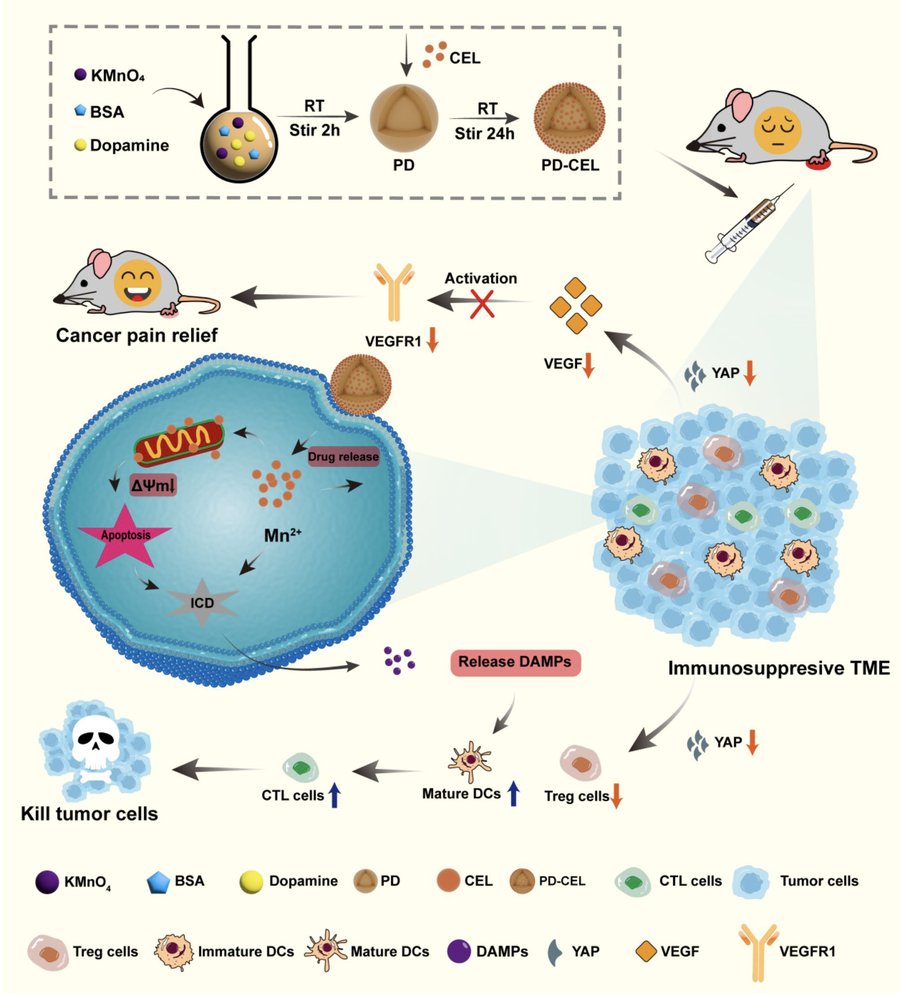
Cancer is one of the leading causes of death worldwide. Cancer-related pain is a common complication that severely impacts quality of patient’s life. However, conventional cancer therapies primarily target tumor cell destruction, often overlooking the management of cancer pain. Thus, there is an immediate necessity to develop therapeutic agents that can both suppress tumor growth and alleviate cancer pain. This presentation discusses how nanoscale materials could be utilized for pain-less cancer therapy. The results from in vitro and in vivo experiments clearly demonstrate the efficacy and mechanism of the nanomaterials, in particular celastrol and MnO2-based nanocomposites, in pain-less immunotherapy. The nanocomposite is greatly inducing immunogenic cell death, mediating immunotherapy. Additionally, celastrol significantly reduces the secretion of the immunosuppressive factor Yes-associated protein within the tumor microenvironment, thereby enhancing the efficacy of immunotherapy. The downregulation of Yes-associated protein leads to reduced expression of vascular endothelial growth factor, inhibiting tumor growth and decreasing activation of the pain-associated VEGF receptor 1, thus providing an analgesic effect. Moreover, celastrol reduces inflammatory pain by lowering levels of inflammatory factors in tumors. In summary, nanoscale material system integrates immunotherapy with cancer pain inhibition, offering a novel approach for pain-less tumor therapy.
University of Sao Paulo – EESC/USP, São Carlos, SP, Brazil.
Murilo A. Romero was born in Rio de Janeiro, Brazil, in 1965. He received the electrical engineering and the M.S. degrees in 1988 and 1991, both from the Catholic University of Rio de Janeiro, Brazil. In 1995, he received the Ph.D. degree from Drexel University, Philadelphia, USA. After his return to Brazil in 1995, he joined the University of Sao Paulo, at Sao Carlos, as a faculty member. At the University of Sao Paulo (USP), he became an Associate Professor in 2001 and a Full Professor in 2008. His research interests span over a large variety of topics in semiconductor device modelling and simulation, as well as in the application of semiconductor devices in optical communications and microwave-photonics. In the last decade, Prof. Romero has been working on the compact modelling of nanodevices including RTDs, nanowires and transistors based on 2D materials. Samples of his research work can be found in more than 70 journal papers, including manuscripts at IEEE Transactions on Nanotechnology, IEEE Open Journal of Nanotechnology, IEEE Transactions on Electron Devices, IEEE Journal of Quantum Electronics and IEEE Transactions on Microwave Theory and Techniques. He is an Associate Editor for the periodical Micro & Nano Letters. He is also an IEEE Senior Member and Latin America (R9) Chapter´s Representative at the IEEE NTC Chapters and Regional Activities Committee.
One of the most promising alternatives to sustain the continuity of Moore´s Law is the use of two-dimensional (2D) materials. Since the discovery of graphene in 2004, these materials have been extensively investigated by the scientific community. Among them, several 2D semiconductors show properties comparable to, or even superior to silicon, making them strong candidates for supporting the industry transition and enabling further transistor scaling. This potential arises primarily from their atomically thin channels, which naturally approach the ultimate limit of thickness reduction and, consequently, provide excellent electrostatic control for field-effect transistors. In this invited paper we address the state of the art for the modeling of nanotransistors based on two-dimensional materials, including Phosphorene, Transition Metal Dichalcogenides (TMDs, such as MoS2) and Semimetal Chalcogenides (SMCs, such as InSe). The focus is on physics-based compact models, which are analytical formulations designed to provide circuit designers with simple and efficient mathematical expressions for the electrical characteristics of the transistor, enabling the simulation of circuit designs that integrate up to billions of these transistors within a feasible timeframe. Compact modeling plays a central role in linking electronic circuit design and semiconductor device fabrication. The primary objective is to accurately reproduce the physical behavior of a transistor in a simulation environment while keeping computational effort to a minimum. Aspects covered in the talk will include band structure, charge density and carrier transport regime, from diffusive to ballistic. Validation against available experimental results is provided.
Fundacion Ciencia & Vida, Universidad San Sebastian, Chile.
Dr. Simón Poblete is a computational biophysicist whose research focuses on the structural dynamics of nucleic acids, particularly RNA and viral genomes. His work combines molecular dynamics simulations, statistical mechanics, and coarse-grained modeling to investigate nucleic acid structure, interactions, and function. He is particularly interested in developing multiscale computational approaches and applying them to problems in virology, RNA biology, and the design of modified nucleic acids and aptamers.
He obtained his Bachelor's degree in Physics in 2004 and his Master's degree in Physics from the University of Chile. He earned his Ph.D. at Johannes Gutenberg University Mainz, Germany, where he conducted his doctoral research in the Theory Group at the Max Planck Institute for Polymer Research. He subsequently held a postdoctoral position at the Institute for Advanced Simulation, Institute for Complex Systems, at Forschungszentrum Jülich, Germany, followed by another postdoctoral appointment at the International School for Advanced Studies (SISSA) in Trieste, Italy.
He later joined the Institute of Physical and Mathematical Sciences at Universidad Austral de Chile as an Assistant Professor. He is currently an Assistant Professor at Universidad San Sebastián and an Associate Researcher at Fundación Ciencia & Vida.
Nucleic acids are fundamental to all living organisms and play central roles in storing, transmitting, and regulating genetic information. Ongoing discoveries of their diverse biological functions have driven novel therapeutic strategies and expanded our understanding of their structural and dynamical properties. Molecular dynamics (MD) simulations represent the gold standard for obtaining atomistic descriptions of biomolecular systems and investigating their structural dynamics at molecular resolution. However, for nucleic acids, their predictive power remains limited by several fundamental challenges. Classical molecular mechanics representations rely on approximations that do not explicitly account for quantum mechanical effects. At the same time, the computational cost of atomistic simulations restricts the spatial and temporal scales accessible to simulation. These limitations are particularly relevant for nucleic acids, whose behavior emerges from the interplay between local chemical interactions, conformational flexibility, long-range electrostatics, solvent effects, and collective organization across multiple length and time scales.
In this talk, we will describe how complementary approaches spanning polymer theory, statistical mechanics, density functional theory, and molecular dynamics can be integrated to overcome some of these limitations and provide multiscale descriptions of nucleic acid systems. By combining theoretical models with atomistic simulations and quantum-mechanical calculations, we aim to connect molecular-level interactions with emergent structural and dynamical properties.
We will illustrate this strategy through two cases. The first concerns the packaging of viral genomes in small icosahedral viruses, where nucleic acid organization within a confined viral capsid can affect the virion stability. The second focuses on the conformational landscape of adenosine monophosphate dinucleotide in aqueous solution, where atomistic and quantum-mechanical approaches are used to parametrize a machine-learning force field able to capture the essential dynamics. Together, these examples show how integrating methods across different theoretical and computational scales can provide a more comprehensive understanding of nucleic acid structure and dynamics.
Nanomaterials Laboratory, Physics Department, Universidad de los Andes, Bogota, Colombia.
Yenny Hernandez is a physics Professor at the Universidad de los Andes in Bogota, Colombia. She currently serves as the Vice Dean of Research for the Faculty of Sciences, a role she has held since 2021. Dr. Hernández earned her undergraduate degree in Physics from the Universidad Nacional de Colombia and her Ph.D. from Trinity College Dublin. She completed postdoctoral research at both Trinity College and the Max Planck Institute for Polymer Research in Germany. A pioneer in the study of carbon-based and two-dimensional materials, Dr. Hernández leads the Nanomaterials Laboratory at Uniandes, focusing on sustainable energy applications. Her research has been widely published in high-impact journals and includes over 46 scientific articles and a recent international patent on graphene-based energy harvesting. She is also co-author of a textbook on waves and fluids and coordinates the university’s Nanoscience and Nanotechnology program. Beyond her academic contributions, she is president of the Humboldt Club Colombia and has been instrumental in promoting international research collaboration, including initiatives with the Lindau Nobel Laureate Meetings. Her leadership continues to shape interdisciplinary research and support the next generation of scientists.
Two-dimensional (2D) material networks assembled from liquid-phase exfoliated nanosheets are versatile, scalable platforms for energy harvesting and energy-conversion technologies, since their functional properties can be engineered simply by controlling nanosheet lateral dimensions and defect population. In this talk, I present how this size- and defect-engineering strategy governs energy-relevant functionalities across four of our recent studies: magnetism, light-energy conversion, mechanical-energy harvesting, and hydrogen generation. First, we found that native point defects such as Te antisites and vacancies drive room-temperature ferromagnetism in nanosheets of Bi2Te3 a property of interest for emerging spin-caloritronic and thermoelectric energy-harvesting devices. Second, in networks of liquid-phase exfoliated MoS2 and WS2 nanosheets printed on flexible substrates, we showed that photoconductive response and sensitivity scale with nanosheet lateral size, a design lever for light-energy conversion and self-powered photodetection. Third, under mechanical strain, the same size-selected nanosheet networks exhibit a lateral-size-dependent transition in piezoresistive gauge factor, governed by a percolative transport model in which inter-sheet junction resistance dominates. Most recently, we extended this size-engineering strategy to electrochemical hydrogen generation, showing that nanosheet lateral size in MoS2 and WS2 networks controls the trade-off between catalytically active edge-site density and inter-sheet network resistance, defining an optimal nanosheet size window for hydrogen-generation efficiency.
Instituto de Ciencia Molecular, C/Catedrático Beltrán 2, Paterna, Valencia, Spain.
José J. Baldoví is a director of the 2D Smart Materials Lab and Distinguished Researcher of Excellence GenT at the Institute of Molecular Science (ICMol), University of Valencia. His research focuses on the development of efficient theoretical and computational frameworks for the design and modelling of advanced materials. His interdisciplinary work integrates physics, chemistry, and materials science to address challenges in magnonics, spintronics, quantum computing, catalysis, and sensing. He has published more than 100 scientific articles and delivered around 70 invited talks and seminars worldwide. As Principal Investigator, he has secured highly competitive research funding, including a prestigious ERC Starting Grant (2022). His distinctions include the Spanish Royal Society of Chemistry Young Researchers “Group Leader” Award (2025), the Catalan Society of Chemistry Emerging Scientific Talent Award (2025), full member of the Young Academy of Spain (2024), elected President of AccenT, and Spain’s representative on the Management Committee of the COST Action SuperQumap, among other recognitions. He also holds a Master’s degree in Science Communication, with extensive experience in communicating complex scientific ideas to broad audiences through initiatives such as “El País con tu Futuro”, “GenTalks”, and “Cátedra Europa”.
The recent isolation of two-dimensional (2D) magnets offers tantalizing opportunities for spintronics, magnonics and quantum technologies at the limit of miniaturization. [1] In this presentation, I will provide an overview of our recent results on this fascinating topic. First, we will take advantage of the outstanding deformation capacity of 2D materials to answer the question: Can we use strain engineering to control spin waves propagation? [2] For that, we will focus on the magnetic properties of the air-stable 2D magnetic semiconductor CrSBr, investigating their evolution under mechanical strain using first-principles. Then, we will introduce the modulation of the magnetic properties, magnon dispersion and spin dynamics of this 2D magnet after the deposition of sublimable organic molecules, molecular spin qubits and spin-crossover molecules in a journey towards molecular controlled magnonics. [3, 4, 5] We will delve into the origin of the high TC of Fe3GaTe2 [6] and, finally, we will introduce a coordination-driven chemical strategy to realize altermagnetic spin splitting in 2D metal-organic frameworks, enabling the rational design of 2D molecular materials with tunable altermagnetic properties for next-generation spintronic devices [7,8,9].
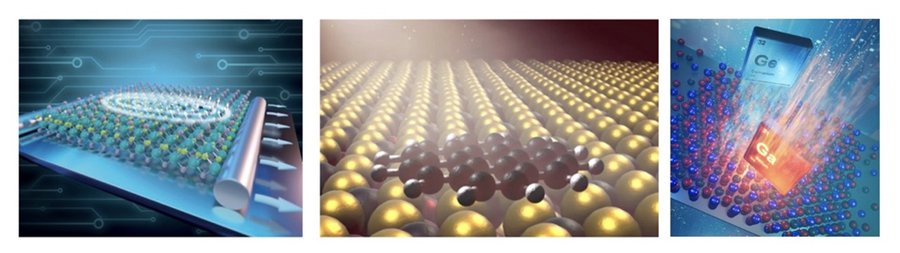
Figure 1: Artistic representation of (left) magnon straintronics device showing the chemical structure of CrSBr; (center) an irradiated coronene molecule on the surface of a 2D magnetic material; (right) formation of a Fe3GaTe2 single-layer representing the enhancement of TC with respect to Fe3GeTe2.
References
[1] B. Huang et al., Nature, 546, 270–273, 2017.
[2] D. L. Esteras, A. Rybakov, A. M. Ruiz, and J. J. Baldoví, Nano Lett., 22, 8771–8778, 2022.
[3] A. M. Ruiz, G. Rivero-Carracedo, A. Rybakov, S. Dey, and J. J. Baldoví, Nanoscale Adv., 6, 3320–3328, 2024.
[4] S. Dey, G. Rivero-Carracedo, A. Shumilin, C. Gonzalez-Ballestero, and J. J. Baldoví, Nano Lett., 25, 10457–10464, 2025.
[5] A. Shumilin, S. Dey, D. Coltuneac, L. Stoleriu, and J. J. Baldoví, Adv. Mater., 38, e23690, 2026.
[6] A. M. Ruiz, D. L. Esteras, D. López-Alcalá, and J. J. Baldoví, Nano Lett., 24, 7886–7894, 2024.
[7] D. López-Alcalá, A. M. Ruiz, A. Shumilin, and J. J. Baldoví, J. Am. Chem. Soc., 148, 25415–25425, 2026.
[8] D. López-Alcalá, A. Shumilin, and J. J. Baldoví, J. Am. Chem. Soc., 148, 27008–27022, 2026.
[9] D. López-Alcalá, A. M. Ruiz, A. Shumilin, and J. J. Baldoví, J. Am. Chem. Soc., 2026.
Center for Advanced Systems Understanding (CASUS), Conrad-Schiedt-Straße 20, Görlitz 02826, Germany.
Helmholtz Zentrum Dresden-Rossendorf (HZDR), Bautzner Landstraße 400, Dresden 01328, Germany.
Dr. Medrano Sandonas is currently a research associate at the Center for Advanced Systems Understanding (CASUS) at the Helmholtz-Zentrum Dresden-Rossendorf (HZDR), Germany. He obtained his Bachelor and Master degrees in Physics at the National University of San Marcos in Peru. He completed his doctorate at TU Dresden in 2018 as a scholarship holder of the International Max Planck Research School and the DAAD. He works on the research and development of quantum-inspired AI methods for biomolecular modeling and drug discovery. During his previous work experiences, he developed several computational frameworks combining machine learning methods with quantum/statistical mechanics to study inorganic and organic materials. In addition to his theoretical investigations, he is actively involved in multidisciplinary projects with partners from academia and industry to address current challenges in physics, chemistry and materials design. He was recently recognized by RSC Digital Discovery as an Emerging Investigator 2026 in the field of machine learning and by the committee of the UNESCO IYQ 2025 as member of the prestigious group QUANTUM 100. He has an outstanding scientific publication record, is a reviewer for numerous journals and has given guest lectures at numerous international institutions.
Artificial intelligence (AI) is transforming molecular and materials discovery by enabling the efficient exploration of vast chemical spaces and accelerating the identification of compounds with targeted properties. However, the growing computational and data demands of AI-driven approaches raise significant challenges for their sustainability. Addressing these challenges requires not only the development of more efficient algorithms but also transparent reporting of computational resources, reusable datasets and models, systematic benchmarking, and resource-aware research practices. In this presentation, I will examine the carbon footprint associated with state-of-the-art AI models and computational datasets, highlighting recent advances and emerging opportunities for making chemical space exploration more sustainable. Within this context, I will present our recent efforts to develop resource-efficient atomistic machine learning (ML) frameworks that integrate physical knowledge, high-quality quantum-mechanical (QM) data, and adaptive learning strategies. In particular, I will discuss how we have exploited the "freedom of design" concept through the development of QALPA, a quantum-informed generative AI framework for designing drug-like molecules with targeted QM properties. QALPA combines property-guided active learning, equivariant diffusion models, and electronic-structure methods to efficiently explore targeted regions of molecular property space while reducing the reliance on computationally expensive QM calculations. Finally, I will discuss broader perspectives on integrating quantum-informed AI models into drug discovery pipelines to improve their computational efficiency and sustainability.
Centro de Investigación y de Estudios Avanzados del Instituto Politécnico Nacional, Mexico City, Mexico.
Gabriel Merino is a Professor of Theoretical and Computational Chemistry and Director of Cinvestav Mérida, Mexico. His research focuses on chemical bonding, aromaticity, and the structure and properties of molecular clusters and extended materials. His work has contributed to the understanding of planar hypercoordination, unconventional bonding, and aromaticity beyond traditional organic systems. More recently, his research has explored computational strategies for navigating chemical space, connecting molecular representations, global optimization, and the discovery of new molecular and solid-state structures. He currently serves as an Associate Editor of Chemical Science and is a member of the editorial and advisory boards of several international journals, including Angewandte Chemie, Journal of Computational Chemistry, and ChemPhysChem. His research combines quantum chemical methods, computational algorithms, and conceptual approaches to chemical bonding to investigate the relationships between electronic structure, molecular geometry, and stability.
The exploration of chemical and configurational spaces is a central challenge in computational chemistry, as the number of possible structures increases rapidly with system size and complexity. In this talk, I will discuss our efforts to address this problem by exploring physical systems through alternative mathematical and symbolic representations, from molecular clusters to two-dimensional materials.
We will first examine strategies for exploring molecular chemical space using SMILES-based representations and graph-theoretical approaches, together with global optimization methods for identifying stable structures on potential energy surfaces. Examples will include molecular isomers and atomic clusters exhibiting unconventional bonding arrangements, such as planar hypercoordinate atoms and multicenter bonding. These studies illustrate how systematic structural searches, combined with electronic structure calculations, can reveal unexpected geometries and bonding patterns.
We will then extend this perspective to layered materials using JAM (Joining and Arrangement of Multilayers), a linear notation that encodes stacking sequences and structural information. By exploiting crystallographic symmetry, JAM enables the systematic enumeration and classification of distinct stacking arrangements, reducing redundancy without requiring the explicit construction of every candidate geometry. Applications to multilayer materials will show how this approach can identify structural configurations associated with different electronic, mechanical, and ferroelectric properties.
Together, these examples highlight a common strategy for exploring complex physical spaces through more manageable representations, in which mathematical descriptions, combinatorial methods, and quantum chemical calculations complement one another to identify structures and understand their properties.
Military Institute of Engineering (IME), Brazil.
Venturus Innovation Center, Brazil.
Anderson Fernandes Pereira dos Santos is a computer engineer and holds a Ph.D. in Computational Modeling. He is a professor and researcher at the Military Institute of Engineering (IME), Brazil, and is involved in quantum computing research at the Venturus Innovation Center. His research interests include quantum algorithms, quantum machine learning, quantum reservoir computing, quantum optimization, and cybersecurity. His current investigations focus on hardware-aware quantum computing, the computational capabilities of quantum dynamical systems, and the practical limitations of near-term quantum technologies.
Quantum Reservoir Computing (QRC) is emerging as a promising paradigm for quantum machine learning, offering an alternative to conventional variational quantum algorithms by exploiting the intrinsic dynamics of quantum systems. Rather than relying on extensively trained quantum circuits, QRC uses fixed or weakly controlled quantum dynamics to transform input signals into expressive representations, typically combined with a lightweight classical readout.
This invited talk examines the foundations, architectures, and practical opportunities of QRC, with particular emphasis on temporal information processing and implementations compatible with near-term quantum hardware. Drawing on a structured investigation of the scientific literature, it discusses how reservoir dynamics, input encoding, observable selection, temporal multiplexing, and measurement strategies influence computational capabilities, including memory and nonlinear information processing. Applications in time-series forecasting, pattern recognition, anomaly detection, and complex dynamical systems will be explored, alongside emerging possibilities involving photonic platforms and other physical quantum reservoirs.
Particular attention will be given to the challenges separating theoretical potential from practical deployment, including quantum noise, measurement overhead, hardware constraints, scalability, and reproducibility. The talk concludes by outlining a research perspective centered on hardware-aware design and systematic benchmarking, highlighting the conditions under which quantum physical dynamics may become a useful computational resource for next-generation intelligent systems.
Instituto de Micro y Nanotecnología, CSIC Madrid, Spain.
Dr. José Miguel García-Martín is a research scientist in the Spanish National Research Council, CSIC, and he works at the Institute of Micro and Nanotechnology (Madrid). He is also a co-founder of Nanostine, a spin-off company that fabricates nanoparticles and nanostructured coatings by sputtering. He obtained his PhD in Physics at Universidad Complutense de Madrid in 1999. He then spent about three years at the Solid-State Physics Lab at Paris-Saclay University (France) on an individual Marie Curie postdoctoral fellowship. He joined CSIC in 2003. He has been Fulbright Visiting Scholar twice: in 2017 at Northeastern University (Boston, Massachusetts) and now in 2025 at the National Institute of Standards and Technology, NIST (Boulder, Colorado). Currently, he studies metal and metal-oxide nanostructures with applications in information and communications technology, energy, and biomedicine. He has coordinated several international projects with partners in the U.S.A., France, Greece, Mexico, Chile, Brazil, and Colombia. He led the Nanoimplant project, which in 2014 won the IDEA2Madrid Award, a partnership between the Madrid Government and the Massachusetts Institute of Technology. In 2023 he received the Award of The Royal Spanish Society of Physics (RSEF) and the BBVA Foundation for the best dissemination article. He has co-authored 110 articles, 7 book chapters and 3 patents, and has given about 50 Invited talks. He is the Past Chair of the Spain chapter of IEEE Magnetics Society, he is a member of the Administrative Committee of that Society and is its representative on the IEEE Nanotechnology Council. He is also a member of the Council of Advisors of the Nanotechnology Engineer Program at Tecnológico de Monterrey (Mexico).
In the first part of this talk, it will be shown that glancing angle deposition with magnetron sputtering is a user-friendly route to fabricate nanocolumnar thin films (NCTFs) of metals and metal-oxides in large areas of several square centimeters and above (scaling-up is feasible) in a single-step process. This is in clear contrast to nanolithography techniques. The development of the nanocolumnar morphology is the result of atomic shadowing, atomic diffusion, and surface relaxation. In the second part of the talk, several applications where NCTFs are of relevance will be described, discussing how and why these nanostructured materials can be used in functional devices. For energy and environment: as magnetic nanopillars with tailored properties, as nanostructured surfaces with photo-induced self-cleaning properties, as nanostructured layers to improve perovskite solar cells, and as black metal coatings in the visible range. For biomedicine: as antibacterial coatings in orthopedic implants, as bioelectrodes for electrical stimulation, as templates for chemical sensing by surface enhanced Raman spectroscopy, and as working electrodes in the electrochemical detection of molecules. Finally, for the aerospace industry: as nanostructured coatings that mitigate the undesirable multipactor effect (which can prevent the correct performance of radio-frequency devices or even damage them).
University of Waterloo, Canada.
John T. W. Yeow received the B.A.Sc. degree in electrical and computer engineering, and M.A.Sc. and PhD. degrees in mechanical and industrial engineering from the University of Toronto, Toronto, ON, Canada. He is currently a Professor and a University Research Chair in the Department of Systems Design Engineering at the University of Waterloo, Waterloo, ON, Canada. He is focused on the development of micro/nanodevices for a wide range of applications. He is a recipient of the Professional Engineers Ontario Engineering Excellence Award, Natural Science & Engineering Research Canada Innovation Challenge Award, Douglas R. Colton’s Medal of Research Excellence, Micralyne Microsystems Design Award, IEEE NANO Excellence Paper award, and IEEE Canada Outstanding Engineer Award. He was a Canada Research Chair in Micro/Nanodevices (2009 – 2019). He served as the Editor-in-Chief of the IEEE Nanotechnology Magazine from 2014 – 2019. He is an IEEE Fellow, and Fellow of the Canadian Academy of Engineering, and the Engineering Institute of Canada. He was a IEEE Nanotechnology Technical Council (NTC) Distinguished Lecturer, and a recipient of the 2021 IEEE NTC Distinguished Service Award. He was the IEEE NTC Vice-President of Educational Activities (2020-2022) and is the IEEE NTC Vice-President Elect of Conferences (2024 – 2026). He will serve as President-Elect in 2027 and President of NTC in 2028-2029
Uncooled infrared detectors are attractive for sensing applications because they eliminate the need for cryogenic cooling, reducing system cost, power consumption, size, and operational complexity. This talk presents an unreleased thermoelectric detector that integrates optical absorption and thermoelectric transduction within a single self-complementary logarithmic spiral structure composed of Cr and Ti/Pt arms joined by a microscale Ni bridge. Unlike conventional thermoelectric detectors that depend on membrane release or suspended microstructures for thermal isolation, the proposed device is fabricated entirely by direct-write lithography and lift-off on an oxide-coated silicon substrate, resulting in a mechanically robust and fabrication-friendly architecture. A multiscale thermal model spanning the junction and the full die is used to investigate heat flow and thermoelectric signal generation. The analysis shows that the 500 nm SiO₂ isolation layer increases the calculated local thermal resistance from 5.5 × 10² K/W on bare silicon to 9.6 × 10³ K/W, demonstrating that substantial thermal isolation can be achieved without membrane release. Device fabrication and characterization are performed on a 16-pixel die under direct illumination from a 1173 K blackbody source. Thirteen of the sixteen devices exhibited measurable responses with an average current-derived voltage of 3.8 ± 1.8 nV. The results demonstrate a simplified approach to broadband, zero-bias thermal detection that avoids both cooling hardware and release processing. While not intended to match the sensitivity of cooled infrared detectors, the proposed architecture highlights a practical pathway toward compact, low-cost, and mechanically robust uncooled infrared sensing systems.
Bio/Nano Technology Group, Arkansas Materials Institute, University of Arkansas, Fayetteville, AR 72701, USA.
Dept. of Bio. & Ag. Engineering, University of Arkansas, Fayetteville, AR 72701, USA.
Materials Science & Engineering Program, University of Arkansas, Fayetteville, AR 72701, USA.
Jin-Woo Kim is a Distinguished Professor of Biological Engineering and Materials Science & Engineering and Director of the Bio/Nano Technology Group at the University of Arkansas, USA. His research bridges biology, engineering, chemistry, and nanoscience to advance biologically inspired nanotechnology and multifunctional biohybrid materials. His scholarly contributions include over 160 publications, a book, multiple book chapters, several patents, and over 290 presentations, including more than 110 invited talks. Dr. Kim earned degrees from Seoul National University, the University of Iowa, the University of Wisconsin, and Texas A&M University. He has held an adjunct professorship at Pohang University of Science & Technology, Korea, and visiting appointments at Harvard University and Brookhaven National Laboratory. An elected Fellow of IEEE and the American Institute for Medical and Biological Engineering (AIMBE), he served as President of the IEEE Nanotechnology Council (2024–2025), following terms as Vice President for Conferences and Vice President for Publications. He has held key leadership and editorial roles in IEEE conferences and journals worldwide. He chairs the steering committees of IEEE-NANOMED and IEEE-LANANO and serves as Editor-in-Chief of IEEE Nanotechnology Magazine, following his tenure as Editor-in-Chief of IEEE Open Journal of Nanotechnology.
Translating the distinctive properties of nanomaterials into practical biomedical functions requires control over their assembly, interfaces, and structural organization. Our Nanotoolbox technology addresses this challenge through the design, assembly, and functionalization of nanoscale building blocks into multifunctional bio-hybrid
materials tailored to specific applications. This keynote will explore how this approach guides the development of nanocellulose-based oral carriers for sensitive payloads, including living microorganisms, biomolecules, nutraceuticals such as lutein, and poorly water-soluble or potentially toxic therapeutics, including anticancer drugs. Effective oral delivery requires carriers that preserve payload activity and integrity during processing, storage, and gastrointestinal (GI) transit, yet release their contents at the intended site. We address these competing requirements by engineering interfaces between cellulose nanocrystals (CNCs) and complementary biopolymers. Combining CNC’s mechanical reinforcement, tunable surface chemistry, and diffusion-barrier properties with responsive polymer networks provides a versatile foundation for controlling carrier stability, permeability, payload–matrix interactions, and release kinetics. The presentation will highlight our design and fabrication strategies, including electrohydrodynamic processing and hierarchical carrier architectures, and examine how nanoscale interactions shape the performance of the resulting delivery systems. A central theme is the relationship between material interfaces, carrier architecture, and the balance between protection and release. The talk will conclude with emerging opportunities to adapt this Nanotoolbox platform to diverse payloads and delivery needs. By connecting fundamental structure–property relationships with scalable fabrication and renewable, bio-derived materials, this research offers a path toward more reliable oral delivery technologies with broad potential in nanomedicine, nutrition, and microbiome-based therapies.
Acknowledgments
This work was supported in part by the Arkansas Biosciences Institute (ABI), the Arkansas Research Alliance (ARA) Impact Grant, and University of Arkansas I3R Watershed Grants
Instituto de Nanosistemas, Universidad Nacional de San Martín, Argentina.
Cintia Belén Contreras (Córdoba, 16/08/1987) received her Ph.D. in Chemistry from the National University of Córdoba, Argentina. She is an Associated Research from CONICET and Associate Professor at the School of Science and Technology (ECyT), National University of San Martín (UNSAM). She is working at the Institute of Nanosystems (INS) where she leads the Smart Hybrid Nanosystems Group. Her research focuses on the design and synthesis of tailor-made smart hybrid nanosystems with stimuli-responsive and multifunctional properties. Her expertise encompasses colloidal chemistry, polymer synthesis, surface modification, and the development of hybrid nanomaterials with controlled architectures and functional domains. She has conducted postdoctoral research visits at Cornell University and the University of Göttingen. Dr. Contreras has received several distinctions for her research, including the 2022 Merck–CONICET Award for Innovation in Health Sciences, as well as awards at national and international scientific meetings. She has also been awarded fellowships from the Fulbright Program and the American Chemical Society. She has authored 18 scientific publications and has presented her work at numerous national and international conferences, including 11 invited presentations.
There is growing interest in the development of smart nanosystems capable of responding to external stimuli, with the long-term goal of achieving increasingly autonomous and adaptive materials [1]. Such systems require complex architectures in which functionality is precisely controlled and spatially localized, enabling the integration of sensing, signal processing, and actuation. Stimuli-responsive nanosystems have emerged as promising platforms for advanced applications because they can undergo controlled physicochemical transitions in response to specific stimuli, including pH, temperature, light, and magnetic fields [2, 3]. Organic–inorganic hybrid nanomaterials are particularly attractive in this context, as they offer versatile architectures and tunable interfacial properties, providing a powerful platform for the development of multifunctional and responsive materials for applications ranging from drug delivery and remote actuation to sensing, energy generation, and, ultimately, logic operations [4, 5].
In this work, we present a modular platform of programmable smart hybrid nanosystems (SHN) based on reproducible and potentially scalable orthogonal strategies for their synthesis and functionalization. This approach provides a proof-of-concept for hybrid nanomaterials in which physicochemical properties can be encoded through the local composition, morphology, and spatial coexistence of distinct functional domains. By systematically varying the nature of the nanobuilding blocks and their organization within the nanosystem architecture, we establish structure–function relationships and demonstrate how the properties and responsiveness of individual functional domains can be tailored to specific stimuli.
Overall, this rational design strategy provides a versatile framework for the development of multifunctional SHN capable of integrating sensing and actuation within a single nanosystem. The concepts presented illustrate how modularity and architectural control can be exploited to program responsive behavior, providing a foundation toward increasingly autonomous and intelligent materials.
References
[1] C.B. Contreras, et al., Materials Nanoarchitectonics, 17, 453–519, 2023.
[2] C.B. Contreras, et al., Langmuir, 36, 1965–1974, 2020.
[3] M.L. Schumacher, et al., RSC Adv., 16, 33484–33501, 2026.
[4] I.F. Améndola, et al., Eur. Polym., 204, 112712, 2024.
[5] M.A. Cabrera Molina, et al., ACS Applied Polymer Materials, 7, 8396–8410, 2025.
Brazilian Center for Research in Energy and Materials, Brazil.
Dr. Ariane Nunes-Alves earned a B.Sc. in Biological Sciences (2010) from the University of São Paulo (USP), followed by both an M.Sc. (2013) and a Ph.D. in Biochemistry (2017) from USP. She completed postdoctoral training (2018-2021) at the Heidelberg Institute for Theoretical Studies (HITS, Germany), funded by the Alexander von Humboldt Foundation. She subsequently served as a Junior Research Group Leader (2021-2026) at the Technical University of Berlin (TU Berlin, Germany). Since 2026, she has been a Lead Researcher of the Kinetics of Molecular Recognition Group at the Brazilian Center for Research in Energy and Materials (CNPEM). Since 2025, she has been an Associate Editor of the Journal of Chemical Information and Modeling.
Understanding biomolecular behavior requires accounting for the molecular context in which interactions occur [1,2]. I will highlight complementary computational strategies that incorporate explicit structural and environmental information to improve the prediction of protein and enzyme properties. In the first part of the talk, I will present a multiscale simulation framework, BROMOLDYN, which combines Brownian dynamics and molecular dynamics simulations to capture protein diffusion, transient interactions, and conformational fluctuations within crowded cellular environments. In the second part of the talk, I will present a machine learning approach, Active Site for KM (AS4Km), that explicitly encodes enzyme active-site features for the prediction of Michaelis constants [3], improving generalization to unseen enzyme-substrate pairs. Together, these studies demonstrate how incorporating biologically relevant molecular context, whether through physical simulations of intracellular environments or structural representations of interaction interfaces, enables more accurate and mechanistically informed models of biomolecular function.
References
[1] A. Mathur, R. Ghosh, and A. Nunes-Alves, J. Chem. Inf. Model., 64, 9063–9081, 2024.
[2] A. Mathur, V. R. Miranda, and A. Nunes-Alves, Curr. Opin. Struct. Biol., 99, 103325, 2026.
[3] D. Lepikhov, L. Sandner, and A. Nunes-Alves, Digit. Discov., 5, 2915–2928, 2026.
Juan Luis Palma2,3*, Yoav Urbina1, Nicolas Tasso1,2, Simón Oyarzún1,2, Guillermo Herrera1, Juan Escrig1,2, D. Toneto3, Marcio A. Correa4, and Juliano C. Denardin1,2,4
1Departamento de Física, Universidad de Santiago de Chile, 8170124 Santiago, Chile.
2Centro de Nanociencia y Nanotecnología (CEDENNA), Santiago, Chile.
3Centro de Investigación en Ingeniería de Materiales, CIIMAT, Universidad Central de Chile, Chile.
4Department of Physics (DFTE), Federal University of Rio Grande do Norte (UFRN), Brazil.
Dr. Juan Luis Palma Solorza holds a Ph.D. in Physics and a degree in Engineering Physics from the University of Santiago de Chile and completed an ANID-funded postdoctoral fellowship. His research focuses on condensed matter magnetism and nanotechnology, particularly magnetic nanowires, nanoparticles, and artificial spin ices. He has expertise in anodization, electrodeposition, electron-beam and UV lithography, atomic force and electron microscopy, and micromagnetic simulations. He has authored more than 40 scientific publications (h-index 18, over 900 citations), participated in 17 research projects, and holds four invention patents. He is currently Director of the Materials Engineering Research Center at Universidad Central de Chile, Chair of the IEEE Magnetics Society Chile Chapter, Editorial Director of Ingeniería al Día, and an associate researcher at CEDENNA, the Center for Nanoscience and Nanotechnology. He has participated in 46 national and international conferences, including six invited talks, and has organized four scientific conferences.
Magnetic skyrmions in heavy-metal/ferromagnet multilayers are promising building blocks for low-power spintronic devices; however, achieving thermally robust and field-free stability at room temperature remains a key challenge. Here, we present a combined experimental and micromagnetic investigation of confined skyrmions in Pt/Co/Ta multilayer nanodisks, with diameters ranging from 200 to 1000 nm, focusing on their switching behavior and layer-resolved topological properties. Using polar magneto-optical Kerr effect microscopy, magnetic force microscopy, and micromagnetic simulations based on experimentally determined magnetic parameters, we show that lateral confinement strongly governs magnetization reversal pathways and skyrmion stability. While continuous films exhibit weak effective anisotropy and labyrinthine stripe domains resulting from the competition among interfacial Dzyaloshinskii–Moriya interactions, exchange, and dipolar energies, patterned nanodisks exhibit pronounced size- dependent behavior. Large disks retain multidomain configurations, intermediate diameters favor skyrmion-mediated switching, and sub-250 nm disks evolve toward coherent single-domain reversal. Notably, 400 nm nanodisks stabilize isolated Néel-type skyrmions at zero magnetic field and room temperature. Micromagnetic simulations reproduce the experimental hysteresis loops and magnetic textures, revealing that geometric confinement reduces the demagnetizing energy and stabilizes the skyrmion state. Importantly, layer-resolved topological charge analysis uncovers a three-dimensional skyrmion structure with non-uniform chirality across the multilayer thickness, highlighting the complex topology of confined multilayer skyrmions. These findings demonstrate that geometric confinement enables zero-field stabilization and controlled switching of skyrmions in multilayer nanodisks, offering a scalable route toward skyrmion-based spintronic devices.
Acknowledgements
This work was funded by ANID CEDENNA CIA 250002, ANID Fondecyt 1241257, 1201491, FONDEQUIP EQM210088, POSTDOC_DICYT 042431CD_Postdoc VRIIC and Puente de Investigación 2025 U. Central. M.A.C. acknowledges support from the National Institute of Spintronics and Advanced Magnetic Nanostructures (INCT-SpinNanoMag), as well as the following CNPq research grants: 301343/2025-0, 404353/2024-0 and 445104/2024-4.
Edwardson School of Industrial Engineering, Purdue University, West Lafayette, IN.
Purdue Women's Global Health Institute (WGHI).
Purdue Institute for Integrative Neuroscience (PINN).
Purdue Institute of Inflammation, Immunology, and Infectious Disease (PI4D).
Purdue Institute for Drug Discovery (PIDD).
Purdue Quantum Science and Engineering Institute (PQSEI).
Purdue Institute of Physical AI (IPAI).
Purdue Center on Aging and the Life Course (CALC).
Dr. Wenzhuo Wu is a Professor and University Faculty Scholar in the Edwardson School of Industrial Engineering at Purdue University. He received his Ph.D. from Georgia Institute of Technology in Materials Science and Engineering. Dr. Wu’s research interests include designing, manufacturing, and integrating nanomaterials for applications in wearable sensors, clean energy, and electronics. He was a recipient of the Oak Ridge Associated Universities Ralph E. Powe Junior Faculty Enhancement Award, IOP Semiconductor Science and Technology Best Early Career Research, Society of Manufacturing Engineers Barbara M. Fossum Outstanding Young Manufacturing Engineer Award, Journal of Materials Chemistry A Emerging Investigator, Advanced Materials Interfaces Hall of Fame , ARO Young Investigator Award, NSF Early CAREER Award, Minerals, Metals & Materials Society (TMS) Functional Materials Division (FMD) Young Leaders Professional Development Award, Microsystems & Nanoengineering (MINE) Young Scientist Award, Purdue College of Engineering Faculty Excellence Award for Early Career Research, Advanced Materials Technologies Hall of Fame, an invited participant in the first U.S.-Africa Frontiers of Science, Engineering, and Medicine Symposium, Sensors Young Investigator Award, an elected Fellow of Royal Society of Chemistry (FRSC), a Purdue University Faculty Scholar, a Humboldt Research Fellow, a Fulbright Scholar, and the IEEE NTC Distinguished Lecturer.
Two-dimensional (2D) semiconductors offer a compelling materials platform for next-generation electronics and sensors, yet translating their intrinsic sensitivity into robust, scalable systems remains difficult. Constraints in synthesis, stability, and device integration continue to limit reproducibility, manufacturability, and real-world performance. This talk will present our progress in tellurene electronics and show how tellurene, an emerging 2D semiconductor with intriguing properties, can help bridge the gap between nanoscale materials discovery and functional wearable systems. We will discuss a materials-to-system strategy that connects tellurene synthesis with device fabrication and multimodal sensor integration. Particular emphasis will be placed on wearable devices designed for continuous monitoring of physiological and mental states. Across these examples, tellurene-based sensors offer a route toward high sensitivity and specificity for physiology-relevant signals in integrated, body-worn platforms. The same material and integration concepts also illuminate broader opportunities for 2D semiconductor nanoelectronics beyond health monitoring. By framing performance at the intersection of material quality, stability, scalable processing, and system-level function, this work addresses a central challenge in nanotechnology: turning promising nanomaterial properties into reliable devices. The talk will conclude with remaining opportunities in manufacturing scale-up, long-term stability, multimodal integration, and steps toward clinical applicability. Together, these advances position tellurene as a versatile building block for emerging nanodevices and as a platform for translating advanced nanomaterials into practical electronics and sensing technologies.
KIPU Quantum, Germany.
I am an independent Technology Advisor and Deeptech Entrepreneur based in Berlin, Germany. I am the CEO and Cofounder at 6.6 Quantum in Action, a startup leveraging Biophysical Quantum AI: the merge of Non/invasive Brain-Computer Interfaces, cloud/room-temperature quantum computers/sensors, and Robotics/Physical AI, while keeping humans in command with ethical standards for evolutionary survival, integration, and well-being. Back in 2021, I founded Kipu Quantum, a company based in Berlin, where I was Co-CEO and then CEO until July 2026. Under my technological leadership, Kipu Quantum became the unique and world-leading quantum computing company delivering solutions with industrial quantum usefulness for use cases with quantum-centric intelligence from the Kipu Quantum Hub. Previously, I have been the CEO of IQM Germany, a leading Finnish quantum computing hardware company, and a cofounder of Quanvia, a thriving quantum sensing company in Spain. Before my entrepreneurial activities, I have been for 2 decades a scientific reference in academia, leading international research centers with interdisciplinary expertise in Peru, Brazil, Spain, China, and Germany: 30,000 citations and 87 h-index. My interests span across the eclectic merge of arts, science, technology, and entrepreneurship. My inventive curiosity surfs along quantum computing, artificial intelligence, quantum simulation, quantum sensing, quantum communication, quantum technologies, quantum artificial intelligence, quantum artificial life, neuromorphic quantum computing, robotics, physical quantum AI, quantum arts, agentic quantum computing, and quantum superintelligence.
I will introduce the various technologies used in commercial quantum processors, covering both digital and analog approaches. I will then explain which industrial applications are best suited to achieving quantum advantage with today’s quantum computers.
Finally, I will offer a perspective on the potential of quantum technologies to transform our industries and societies.
Department of Biomedical Engineering, City University of Hong Kong, Hong Kong, China.
Lixin Dong is a Professor at the City University of Hong Kong. He received his Ph.D. degree in Micro Systems Engineering from Nagoya University in 2003 and became an Assistant Professor there in the same year. Prior to joining the City University of Hong Kong, he was an Associate Professor at Michigan State University in 2019, where he was the founder and director of NanoRobotic Systems Lab. He held a Senior Research Scientist at ETH Zurich by 2008, where he led the NanoRobotics Group in the Institute of Robotics and Intelligent Systems (IRIS) between 2004 and 2008. His research interests include micro/nanorobotics, atomic manufacturing, intelligent nanoelectromechanical systems, and nanobiomedical devices. Dr. Dong is a Fellow of the IEEE and the AAIS. He serves as the EiC of IEEE OJNANO and was the Vice President of Educational Activities (2022 and 2023) and Conferences (2019 and 2020) of the IEEE Nanotechnology Council and has been a Senior Editor for IEEE Transactions on Nanotechnology and an Associate Editor for IEEE Transactions on Automation Science and Engineering (T-ASE). He was a recipient of the National Science Foundation CAREER Award in 2011 and the IEEE T-ASE Googol Best New Application Paper Award in 2007.
NanoRobotic manipulation provides an effective tool for prototyping components for micro-/nano-sized robotic systems. This talk addresses the challenge of building functional devices at the nanoscale, where conventional robotic components and measurement tools reach their physical limits. I will present a progressive series of sensing devices developed specifically for micro-/nano-sized robotic applications: field-emission position sensors for molecular-scale linear servo motors (sub-10-nm resolution), electron tunneling force sensors in nanowire-encapsulated structures (sub-1-nm displacement resolution), and quantum conduction strain sensors based on one-dimensional atomic chains (sub-0.1-nm deformation resolution). Each device is designed not only as a standalone sensor but as an integrated component of a robotic system, where atomic manipulation and ultra-high-resolution imaging are combined to correlate atomic-scale features—chirality, defects, magic angles—with physical properties. This correlation enables the co-design of sensing solutions alongside the manipulation systems themselves, supporting sophisticated nanomanufacturing processes and in vivo healthcare applications. The talk will conclude with a perspective on how nano-robotic manipulation-based prototyping can bridge the gap between embodied intelligence in micro-/nano-sized robots and the practical device architectures required for real-world applications.
Department of Biomedical Engineering, and Department of Electrical and Computer Engineering
Michigan State University, USA.
Jinxing Li is a Red Cedar Distinguished Assistant Professor in the Department of Biomedical Engineering and the Institute for Quantitative Health Science and Engineering at Michigan State University, where he has been a faculty member since 2021. He also holds adjunct appointments in the Department of Electrical and Computer Engineering and the Department of Chemical Engineering and Materials Science. He earned his Ph.D. in NanoEngineering from the University of California, San Diego, in 2017, followed by a summer visiting scholarship at Nokia Bell Labs and three years of postdoctoral training at Stanford University. He received his M.S. from Fudan University and his B.S. from Huazhong University of Science and Technology, both in Electrical Engineering. His research integrates new biomaterials, bio-centered design, and precision manufacturing to develop bioelectronics and microrobotics that can advance precision and personalized healthcare. He is a recipient of the NSF CAREER Award, the NIH NIBIB Trailblazer Award, the inaugural DOE ARPA-E IGNIITE Award, the Siebel Scholar in Bioengineering, the Dan David Scholarship, and has been named to the MIT Technology Review Innovators Under 35 Global List.
Micro/nanorobots offer unique opportunities to access and interact with biological environments at spatial scales that are difficult to reach using conventional medical devices. Among various actuation strategies, magnetic fields are particularly attractive for biomedical applications because they enable wireless and remotely controllable operation in biological tissues. However, translating magnetic micro/nanorobots from locomotion demonstrations toward practical biomedical systems requires the integration of multiple functions, including controlled propulsion, navigation, imaging, and therapeutic intervention. In this presentation, I will discuss our efforts to engineer multifunctional magnetic micro/nanorobots across different length scales and biomedical scenarios. I will first highlight the development of magnetically propelled nanoswimmers and hybrid micro/nanorobotic systems that enable controlled locomotion in complex environments. I will then introduce our recent TriMag microrobot platform, in which three-dimensional microfabrication and magnetic materials are integrated to combine magnetic actuation, magnetic particle imaging, and magnetic hyperthermia within a single microrobotic system. These capabilities enable remotely controlled navigation together with noninvasive localization and localized therapeutic functions. Collectively, these studies illustrate a progression from magnetic propulsion toward multifunctional and image-guided micro/nanorobotic systems, and highlight opportunities and remaining challenges for translating magnetic microrobots into minimally invasive biomedical technologies.
Department of Chemistry of Materials, University of Santiago de Chile. Santiago 91270 Chile.
José Heráclito Zagal is the National Natural Sciences Awardee 2024, Chile. Distinguished Professor and Emeritus at the University of Santiago de Chile, Chemist from the University of Chile in 1973. Ph.D. from Case Western Reserve University, Cleveland Ohio, USA (1978) and Postdoctoral Fellow at the Department of Energy at Brookhaven National Laboratory, New York (1982). He has received a series of distinctions both in Chile and abroad, including the Presidential Chair of Science in 1996, from President Eduardo Frei Ruiz-Tagle Awarded the Global Energy Association Honorary Diploma 2025, the Linstead Career Award 2025, from the International Society of Porphyrins & Phthalocyanines He received the Fellow Medal of the International Society of Electrochemistry and the Fellow Medal of the Electrochemical Society, (US). He received the Fellow Medal of the Royal Society of Chemistry (United Kingdom) and elected Emeritus Member of the Electrochemical Society. He received the "Agustín Arévalo" Award from the Ibero-American Society of Electrochemistry (SIBAE) and the Rectoral Medal of the University of Chile in 2024. 100 Senior Leaders Award Conecta Mayor PUC and El Mercurio 2025. Award for Excellence and Trajectory in Chemistry 2026, Chilean Society of Chemistry. He has published more than 288 scientific articles, 14 book chapters, 8 books and 6 patents on electrodes for hydrogen fuel cells, the latter with the Chilean Navy. He has supervised more than 104 disciples as undergraduate and graduate thesis students and 38 postdoctoral students.
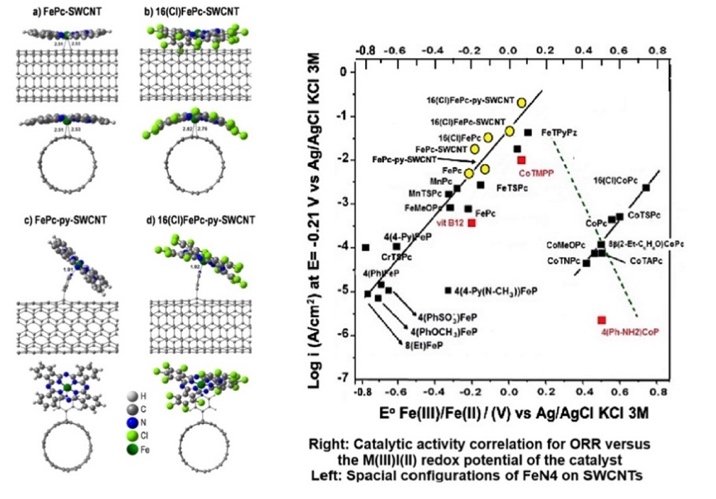
The electrocatalytic activity of iron phthalocyanine (FePc) and perchlorinated iron phthalocyanine 16(Cl)FePc for the oxygen reduction reaction (ORR) in alkaline medium increases when anchored on single-walled carbon nanotubes (SWCNTs) compared to their activity when attached directly to pyrolytic graphite electrodic surfaces (OPG). However the activity increases even further when the phthalocyanines are covalently anchored to OPG via an axial pyridine ligand on pyridine-functionalized single-wall carbon nanotubes (py-SWCNT). Regardless of the particular phthalocyanine type, the ORR activity is higher when the substrate is py-SWCNT rather than SWCNT. Contrary to what it is commonly believed that the increase in activity can be attributed to an enlarged surface area due to the presence of the carbon nanotubes, when this effect is corrected the increase in activity is still observed. The most plausible explanation is that the carbon nanotubes shift the Fe(III)/II redox potential of the complexes to more positive potentials and this parameter is a reactivity descriptor [1]. The catalysts “climb” an activity volcano correlation towards a maximum activity as observed in a volcano correlation including a large number of MN4 catalysts confined on OPG surfaces (see Figure 1). While FeN4 macrocycles are known to be located on the strong binding side of a volcano correlation including several MN4 species, the chlorine substituents decrease the binding energy of O2 on the central Fe cation, thereby moving up the macrocycle catalyst towards the apex of the volcano correlation. Both the carbon surface and macrocyclic ligand effects were optimized with 16(Cl)FePc attached to py-SWCNTs, which is more active than both FePc on SWCNTs and FePc on py-SWCNT. Here we show that both the axial ligand and the electron withdrawing groups (-Cl) have a combined collaborative effect in increasing the catalytic activity for ORR of Fe-phthalocyanines confined on the external walls of single-wall carbon nanotubes. The beneficial effect will also be discussed for the electrochemical oxidation of thiols.
Reference
[1] J.H. Zagal, M.T.M. Koper, Angew. Chem.,Int.Ed., 55,14510, 2016.
Matter Lab, University of Toronto, Canada.
Completed his undergraduate and master's studies in chemistry at Universidad del Valle in Cali, Colombia, where he investigated molecular vibration under intense infrared radiation and whether those interactions could help control chemical bond breaking. He earned his PhD in Chemistry and Biochemistry at the University of California, San Diego, under Prof. Joel Yuen-Zhou. His doctoral research developed theoretical methods for strong light-matter coupling, where photons and molecules form hybrid states known as polaritons. He joined the Matter Lab as a University of Toronto postdoctoral fellow, drawn by machine learning's growing impact on chemistry. Led by Professors Alán Aspuru-Guzik and Varinia Bernales, the Matter Lab pioneers AI-enabled materials discovery and self-driving laboratories. His current research examines how AI agents can operate scientific software, reason across computational workflows, and accelerate computational chemistry.
Computational chemistry is extraordinarily powerful, but using it well still demands expertise in choosing methods, operating specialized software, diagnosing failures, validating assumptions, and interpreting results. In this talk, I will discuss how AI agents can lower these barriers by turning scientific questions into adaptive computational workflows.
I will first introduce El Agente Quntur, a hierarchical multi-agent system that uses scientific literature and software documentation to plan, execute, revise, and analyze quantum-chemistry investigations. I will show that, compared with Claude Code operating in the same software environment, Quntur's domain-specific agent architecture more faithfully translates open-ended chemical requests into defensible end-to-end computational protocols. Because full Quntur executions can be expensive when similar tasks recur, I will describe how coding agents can turn successful runs into reusable Python workflows. Quntur can call these workflows directly or adapt them to new queries, reducing repeated reasoning and tool use without locking future investigations into rigid procedures. Using CASSCF as an example, I will also examine why reuse must coexist with scientific judgment when active-space selection, state averaging, convergence recovery, and state identification determine the quality of the result.
Finally, I will move from analysis to inverse design. I will discuss how agents can start from a desired property, combine literature knowledge with computational models, and iteratively propose and evaluate candidates under scientific constraints. Connecting this process to quantum chemistry creates a closed loop from question to simulation, evidence, and a revised hypothesis or design.
I will conclude by arguing that agents are most useful not as replacements for scientific judgment, but as infrastructure that turns scientific intent into reproducible computation. Realizing that opportunity will require grounded reasoning, verification, provenance, uncertainty awareness, and transparent human oversight.
Acceleration Consortium, University of Toronto, Toronto, Canada.
Kourosh Darvish is a staff scientist at the Acceleration Consortium at the University of Toronto. Previously, he served as a postdoctoral researcher at the Computer Science and Robotics Institute of the University of Toronto (UofT) and was a member of the Vector Institute. Before joining UofT in 2022, he worked as a postdoctoral researcher at the Italian Institute of Technology (IIT). In 2019, he completed his PhD in Bioengineering and Robotics from the University of Genoa, Italy. He earned his B.Sc. and M.Sc. degrees in Aerospace Engineering from K.N. Toosi University of Technology and Sharif University of Technology (Tehran, Iran) in 2012 and 2014, respectively. His research focuses on robot learning, robotics for scientific discoveries, shared autonomy, humanoid robotics manipulation, and optimal control.
How can robots learn to handle the diversity and precision of chemistry experiments? This talk explores how robot foundation models, human demonstrations, digital twins, and reinforcement learning support the development of reusable laboratory skills. Examples from liquid handling, powder manipulation, and tool use illustrate how learned policies combine with perception, motion planning, and instrument feedback to adapt to changing experimental conditions. I will discuss the challenges of operating in confined laboratory spaces and translating individual skills into reliable experimental execution. Together, these advances chart a path toward more flexible laboratory automation that learns from demonstrations and improves through experience.
Danilo González Nilo, Alejandro Yevenes, Ingrid Araya, Francisco Salgado, Enzo Cevo
Centro de Bioinformática y Biología Integrativa (CBIB), Facultad de Ciencias de la Vida, Universidad Andrés Bello, Santiago, Chile.
Dr. Fernando Danilo González Nilo is a Full Professor and Director of the Center for Bioinformatics and Integrative Biology (CBIB) at Universidad Andrés Bello (UNAB), Chile, where he also directs the Doctoral Program in Bioinformatics and Systems Biology. Holding a Ph.D. in Chemistry, Dr. González Nilo has cultivated a distinguished interdisciplinary career at the interface of theoretical biophysics, computational structural biology, and functional nanotechnology. His research program spans from elucidating fundamental molecular mechanisms in complex biological assemblies to engineering translational nano-scale platforms for targeted therapeutics, environmental technologies, and materials science.
The scientific foundation of Dr. González Nilo's research is rooted in the molecular biophysics of membrane transport systems, with seminal contributions to understanding the structure-function relationships, gating mechanisms, and allosteric modulation of ion channels and hemichannels, specifically, TRP superfamily members, such as TRPM4 and TRPM8, as well as connexins and pannexins. By combining high-performance molecular dynamics simulations, free-energy calculations, and continuum electrostatics with rigorous collaborations in functional electrophysiology, his laboratory has systematically uncovered ligand-binding pathways, pore-opening transitions, and lipid-protein interfacial dynamics. This extensive experience in dissecting electrochemical gradients and soft matter interfaces served as the conceptual bridge to rationally designing biomolecular modulators and engineering dynamic colloidal surfaces at the nanoscale. Capitalizing on advances in generative artificial intelligence and structural deep learning architectures, Dr. González Nilo has established a cutting-edge pipeline for the de novo design and optimization of single-domain antibodies (nanobodies), including camelid-derived VHH and shark-derived VNAR scaffolds. His group executes an end-to-end framework that couples in silico epitope targeting, hypervariable loop (CDR) design, and stability optimization with recombinant protein expression, purification, and experimental biophysical validation. These engineered nanobodies serve as high-affinity molecular binders that selectively recognize cryptic epitopes on challenging membrane targets, bacterial transporters, and viral surface antigens, making them potent candidates for targeted drug delivery and rapid diagnostics.
Over the past decade, Dr. González Nilo has emerged as an international leader in the science, interfacial phenomena, and technological applications of nanobubbles. His laboratory investigates the fundamental colloidal stability, interfacial water structuring, surface charge (zeta potential), and hydrodynamic cavitation dynamics of gas-liquid nano-interfaces. Within the biomedical field, he co-leads a major international initiative supported by Wellcome Leap under the Focused Antibiotics program in partnership with Purdue University, pioneering the development of biofunctionalized nanobubbles conjugated with AI-engineered protein binders to achieve targeted, on-demand antibiotic delivery against multidrug-resistant pathogens. Complementing these biomedical progress, his basic physics inquiries into fluid dynamics and gas-phase nano-assemblies have earned long-standing sponsorship from the U.S. Air Force Office of Scientific Research (AFOSR/SOARD). Furthermore, Dr. González Nilo operates pilot-scale hydrodynamic cavitation platforms to intensify mass-transfer rates and significantly enhance the solubility and chemical reactivity of recalcitrant bioactive, alongside spearheading patented sustainable polymer-nanobubble composite materials for high-efficiency environmental mitigation in industrial mining. Recognized with the National Innovation Award Avonni 2024 for technology transfer, Dr. González Nilo continues to advance interdisciplinary innovations, supported by publications in leading international journals and a strong intellectual property portfolio.
Gas nanobubbles (NBs) in liquid media represent one of the most promising frontiers in colloidal nanotechnology and soft-interface engineering. They have diameters below 200 nm, a high specific surface area, and a markedly negative zeta potential. Their buoyancy is negligible, so their motion is dominated by Brownian diffusion. As a result, they can remain stable in aqueous solution for more than six months. This combination of thermodynamic and hydrodynamic properties gives them a distinctive physicochemical reactivity. They can therefore act both as modulators of biological interfaces and as carriers for the delivery of therapeutic agents. In this presentation, we will report the main findings from our laboratory in three areas: agribusiness, mining, and the biofunctionalization of NBs for the targeted delivery of poorly soluble drugs.
In agribusiness, oxygen NBs generated by controlled hydrodynamic cavitation modulate nutrient transport, ion uptake, and cellular bioenergetics. We have observed that they enhance both passive and active transport across plant membranes. We attribute this effect to the modulation of local redox microenvironments and a reduction in osmotic resistance. This optimizes nutrient flux and activates signaling mechanisms in response to oxidative and water stress.
In mining, we have optimized NB-based formulations to control exposure to respirable particulate matter. Conventional water-based dust suppression is inefficient here because of the properties of desert soils. Using pilot-scale hydrodynamic cavitation, we produce systems with a very high density of gas-liquid interfaces. The high surface energy and electrokinetic reactivity of NBs have three effects: they substantially lower dynamic surface tension, promote heterogeneous nucleation on dust particles, and overcome the hydrophobic barrier of the mineral. The result is irreversible colloidal aggregation and persistent entrapment of dust during critical operations such as blasting, loading, and haulage. This is achieved with water consumption orders of magnitude lower than that of conventional methods, while mitigating serious occupational health risks such as silicosis.
The convergence of molecular simulation, protein engineering, and nanoscale molecular dynamics establishes nanobubbles as a versatile, biocompatible, and scalable platform for future nanomedicine and biotechnology.
Department of Electrical and Computer Engineering, Democritus University of Thrace, Xanthi, Greece.
Fungal mycelium is a living network of hyphae that grows, senses its environment, fires spike-like electrical signals and ages, much like a primitive nervous system woven into a material. This presentation gives an overview of how mycelium turns to be a engineered living material with computational abilities and from the nanoelectronic side: how nanoscale memristive devices and circuits can model, emulate, interface with and compute alongside a living fungus. The approach starts from a hardware-compatible model. Reaction-diffusion cellular automata reproduce hyphal growth and branching in 2D and 3D and respond to temperature, humidity and light. Genetic algorithms fit the model to experimental growth data, and the fitted model is then implemented on FPGAs. The model is next mapped onto memristive nanoelectronics. In these devices the state is set by nanoscale ionic motion and conductive-filament formation, much as the mycelium’s electrical state is set by ion transport across its membranes. Memristive oscillating cellular automata and a reconfigurable 100×100 spiking grid reproduce signal propagation through the mycelium. At device level, this work is supported by fabricated 7 nm SiNx memristive devices, Pt-nanocrystal CBRAM cells reaching 6-bit precision in a 1T1R configuration, and halide-perovskite threshold switches. The nanoscale crossbars are programmed with WaCPro, an open-source programming tool. These digital twins are then put to work as reservoir computers that exploit the small-world structure of mycelium. Mycelium-derived reservoirs classify handwritten digits with up to 97.09% accuracy, and a memristive reservoir circuit recognizes Parkinson’s disease from EEG signals. A low-power SAR ADC prepares the interface to the living substrate itself. Finally, the work addresses the constraints of a real living product. Memristive circuits emulate how aging mycelium loses excitability and connectivity, and compact reconfigurable electronics detect and compensate this drift with minimal non-recyclable hardware. The same filament dynamics, captured in a compact CBRAM model, also let a memristive lattice self-organize into a network resembling the Greek transportation system.